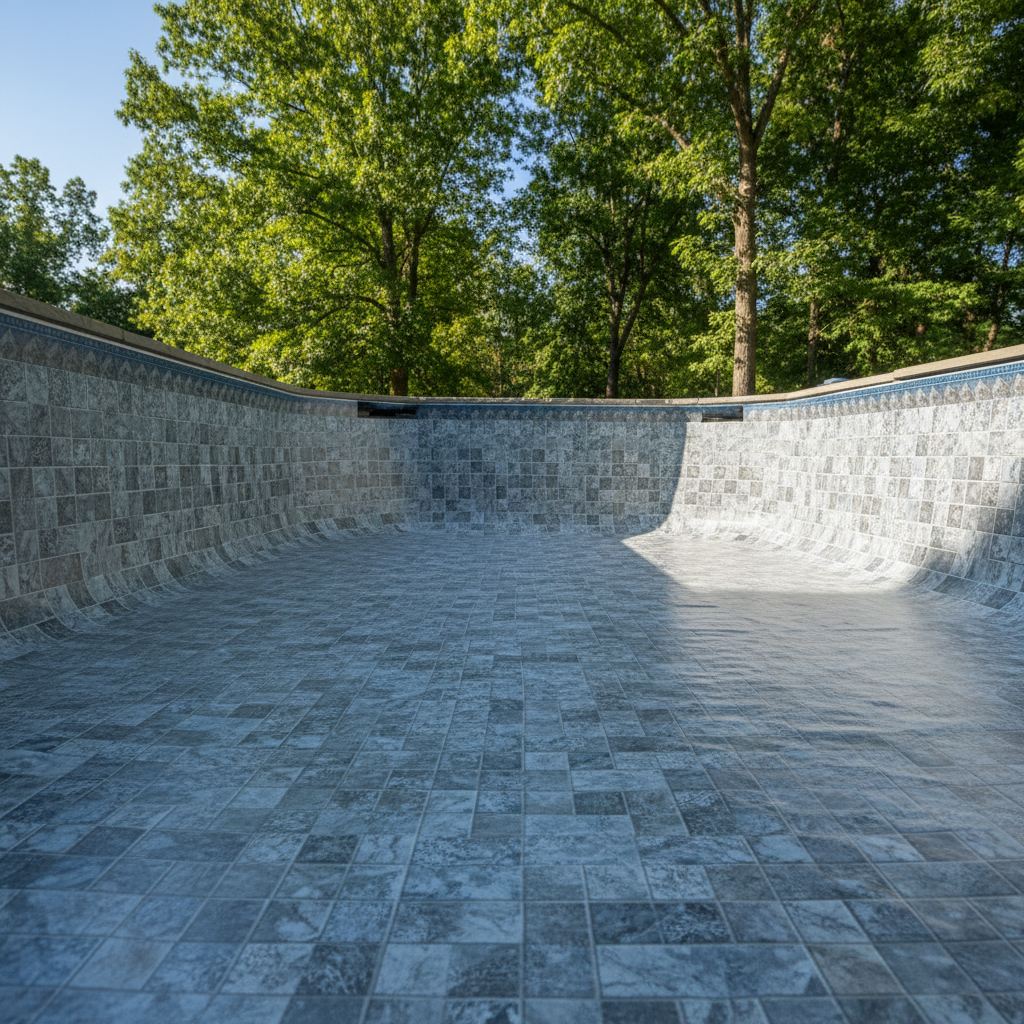
Is your pool liner starting to look faded, brittle, or wrinkled? Around Hendersonville, our clay-heavy soil and hot summers put a lot of stress on vinyl liners, usually forcing a replacement every eight to twelve years. If you are staring down a liner change, you want to know what you can tackle on your own and what requires a pro.
Before You Start: Assessing the Damage and Measuring
You need to figure out if you actually need a new Swimming Pool Liner or just a patch. Small tears happen, but if the vinyl is cracking, slipping out of the track entirely, or has bleached out to a brittle white, it is time for a full swap. Measuring your pool accurately is an important step before ordering a custom replacement. While you can technically measure your own pool, getting the hopper depth and wall heights wrong means your new Swimming Pool Liner will not fit right. Sunrise Pools sees homeowners struggle with DIY measurements because old vinyl stretches or shrinks. If your pool has custom steps or a unique shape, let a professional handle this phase so you do not end up with expensive scrap material.
During the Project: Demo vs. Installation
Once you decide to move forward, you can save some cash by doing the dirty work yourself. Draining the pool and tearing out the old, heavy vinyl liner is grueling work, but it does not require specialized skills. Grab a utility knife, cut the old material into manageable strips, and haul it away. After the pool is empty, you will also need to repair the vermiculite or concrete pool floor. Hendersonville soils and shifting ground can cause minor cracks and pitting underneath. Patching small floor imperfections with a base mix is doable for a handy homeowner. However, hanging the new Swimming Pool Liner, locking it into the track, and pulling the wrinkles out while filling the pool is an art form. It requires warm sunlight to make the vinyl pliable and heavy-duty vacs to suck the liner against the walls before water goes in. One mistake here leaves permanent wrinkles or stretches the material past its limit.
After the Refill: Balancing and Maintenance
Your pool is finally filled with fresh water, but your job is not done. The water chemistry out of our local tap needs immediate attention. You will want to test the pH, total alkalinity, and calcium hardness right away to protect your brand-new vinyl. High chlorine shock can bleach a new Swimming Pool Liner if it is not dissolved properly, so always mix chemicals in a bucket first or run your pump continuously while adding them. Keep an eye on the bead line around the coping stones over the first few weeks to make sure it stays seated. If you take your time and know your limits, swapping your Swimming Pool Liner will give your backyard a total reset just in time for summer.